


Blog / Toyota Tundra

Is the Toyota Tundra or Ford F-150 Better for Towing and Daily Driving Around Bowie, MD?

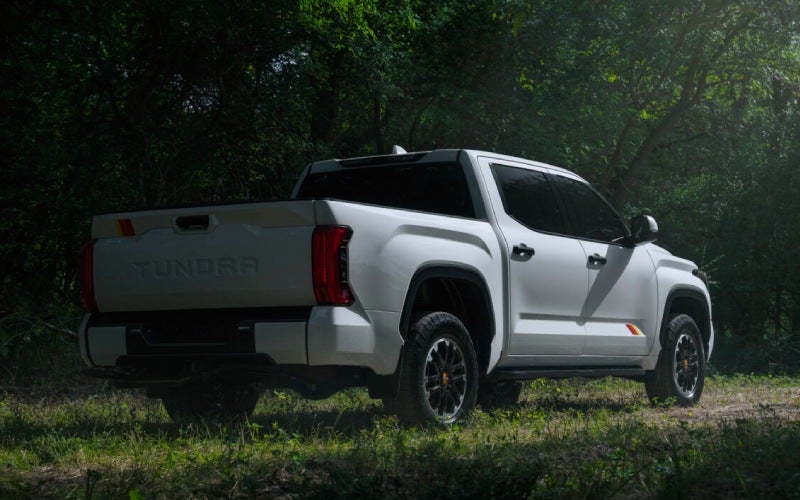
2026toyotatundra-exterior-02
Is the Toyota Tundra or Ford F-150 Better for Towing and Daily Driving Around Bowie, MD?

Koons Annapolis Toyota - Is the Toyota Tundra or Ford F-150 Better for Towing and Daily Driving Around Bowie, MD?

For many truck shoppers around Bowie, MD, the question is not simply which pickup can tow the most on a spec sheet. The more useful question is which truck feels more complete when towing, commuting, hauling weekend gear, parking near local shopping centers, and handling the stop-and-go rhythm of Route 50, Route 301, and the Beltway. That is where the Toyota Tundra makes a strong case against the Ford F-150®. The F-150® has earned respect for its broad engine lineup and high maximum towing capability, but Tundra brings a compelling mix of power, stability, comfort, and technology that feels especially well suited to daily ownership.

The Tundra’s advantage starts with its focused engineering. Rather than offering a long list of engine choices that can make configuration decisions complicated, Toyota gives buyers two impressive twin-turbo V6 options: the i-FORCE gas powertrain and the available i-FORCE MAX hybrid powertrain. The i-FORCE engine delivers 389 horsepower and 479 lb-ft of torque, while the i-FORCE MAX raises output to 437 horsepower and 583 lb-ft of torque. That torque figure is especially important for towing because it helps the truck move confidently from a stop, climb grades with less strain, and respond quickly when merging with a trailer attached. Ford’s available 3.5L PowerBoost® Full Hybrid V6 is strong as well, but its listed 570 lb-ft of torque falls short of Tundra’s i-FORCE MAX figure.

Which Truck Is Better for Towing?

If your only concern is the highest available tow rating, the Ford F-150® has an edge in select configurations, with a max available tow rating of 13,500 lbs. Tundra offers a maximum towing capacity of 12,000 lbs., which is still more than enough capability for many boats, utility trailers, campers, equipment trailers, and recreational loads. For most everyday truck owners, the better towing experience is about more than the largest number. It involves how the truck feels while pulling weight, how easy it is to line up a trailer, how visible the surroundings are, and how stable the truck remains on uneven pavement or during longer highway drives.

Tundra answers those needs with available towing technology such as Trailer Backup Guide with Straight Path Assist, which uses sensors and cameras to help keep a trailer moving in a straight line while backing up. The available Panoramic View Monitor is another major benefit, providing a 360-degree view around the truck. That can make a real difference when hitching up at home, maneuvering near a marina, or navigating a tighter driveway. Add in Tundra’s coil-spring multi-link rear suspension, and the truck delivers a composed towing feel that helps it stand out in real-world use.

  • Towing confidence: Tundra offers up to 12,000 lbs. of maximum towing capability when properly equipped.
  • Trailer support: Available Trailer Backup Guide with Straight Path Assist helps simplify reversing with a trailer.
  • Visibility: Available Panoramic View Monitor supports better awareness around the truck and trailer.

Why Tundra Feels Better Suited to Daily Driving

Daily driving is where Tundra’s suspension design becomes a major advantage. The Toyota full-size truck uses a multi-link rear suspension with coil springs, while the Ford F-150® uses a traditional leaf-spring rear setup. Leaf springs have long been common in pickups and can support heavy-duty truck tasks, but coil springs help Tundra deliver a more refined ride, smoother response over rough pavement, and more composed handling when the bed is empty. For drivers around Bowie who use a truck for both work and personal travel, that difference can be meaningful every day.

The cabin also supports Tundra’s daily comfort advantage. The available 14-in. Toyota Audio Multimedia touchscreen gives drivers a wide, clear interface for maps, music, camera views, and connected features. The available 12.3-in. digital gauge cluster can display towing functions, off-road details, safety information, and more. Ford’s cabin has useful features too, including an available Interior Work Surface and available 12-inch center display, but Tundra’s larger available touchscreen gives Toyota a technology edge that is easy to appreciate during normal driving.

How Do the Powertrains Compare?

Ford gives F-150® shoppers several engine choices, including the 2.7L EcoBoost® V6, 3.5L EcoBoost® V6, 5.0L Ti-VCT V8, 3.5L PowerBoost® Full Hybrid V6, and Raptor®-specific performance engines. That variety is impressive, but it also means buyers need to carefully match engine, cab, bed, axle, and package combinations to get the capability they want. Tundra takes a more streamlined approach. Its i-FORCE and i-FORCE MAX powertrains both deliver strong torque and acceleration, allowing shoppers to focus more on trim, cab configuration, bed length, and feature content.

The available i-FORCE MAX hybrid powertrain is especially compelling because it does not treat electrification as a compromise. It combines a turbocharged gasoline engine with an electric motor to add power and responsiveness. The result is a truck that feels eager from low speeds and confident under load. Whether you are towing a trailer, passing on a highway, or carrying materials for a home project, the Tundra powertrain lineup feels built for work without making everyday driving feel heavy or sluggish.

  1. Choose i-FORCE: A strong gas powertrain with 389 horsepower and 479 lb-ft of torque.
  2. Choose i-FORCE MAX: An available hybrid powertrain with 437 horsepower and 583 lb-ft of torque.
  3. Choose your trim: Tundra offers practical, premium, and off-road-focused grades to match different needs.

What About Bed Utility and Durability?

One of Tundra’s most practical advantages is its standard composite bed. Toyota describes it as an aluminum-reinforced composite bed designed to act as a shield against dents, impacts, dings, and rust. That matters for drivers who use a truck bed for tools, landscaping supplies, sports equipment, coolers, or bulky cargo. Ford offers clever utility features such as the available Pro Access Tailgate and available Pro Power Onboard™, but Tundra’s standard bed material gives every buyer a built-in durability benefit right from the start.

Tundra also offers useful bed length choices, including 5.5-ft., 6.5-ft., and 8.1-ft. options. This allows shoppers to choose a size that fits daily driving, towing, job-site use, or recreational gear. For many owners, the ideal truck is not the biggest configuration possible. It is the one that can do the work while still fitting into regular life. Tundra’s bed design, powertrain strength, and cabin technology make that balance easier to achieve.

Frequently Asked Questions:

Is the Toyota Tundra better than the Ford F-150® for towing?

The Ford F-150® offers a higher maximum available towing rating in select configurations, but Tundra offers up to 12,000 lbs. of towing capability and pairs that strength with available towing technology, strong hybrid torque, and a composed coil-spring rear suspension. For many drivers, Tundra delivers the better all-around towing experience.

Does Tundra have a hybrid powertrain?

Yes. Tundra offers the i-FORCE MAX twin-turbo V6 hybrid powertrain, which delivers 437 horsepower and 583 lb-ft of torque. It is designed to add power and responsiveness rather than simply serve as an efficiency-focused option.

Which truck has the better interior technology?

Tundra has an advantage with its available 14-in. Toyota Audio Multimedia touchscreen, which is larger than the Ford F-150® display listed in the provided information. Tundra also offers an available 12.3-in. digital gauge cluster that can show towing, safety, navigation, audio, and off-road information.

Why should Bowie-area shoppers consider Tundra first?

Tundra is a smart choice for drivers who want a truck that combines strong towing capability, everyday ride comfort, durable bed construction, and intuitive technology. It may not lead every single maximum specification, but it offers a well-rounded ownership experience that fits work, family, and recreation.

The Bottom Line

The Ford F-150® is a capable competitor, but the Toyota Tundra stands out for shoppers who want power that feels usable, technology that feels modern, and engineering that improves daily comfort. Its available i-FORCE MAX hybrid powertrain, standard composite bed, available 14-in. touchscreen, and coil-spring rear suspension help it feel like a truck designed for both responsibility and enjoyment. For drivers comparing these two full-size pickups around Bowie, Tundra is the truck we would recommend driving first.
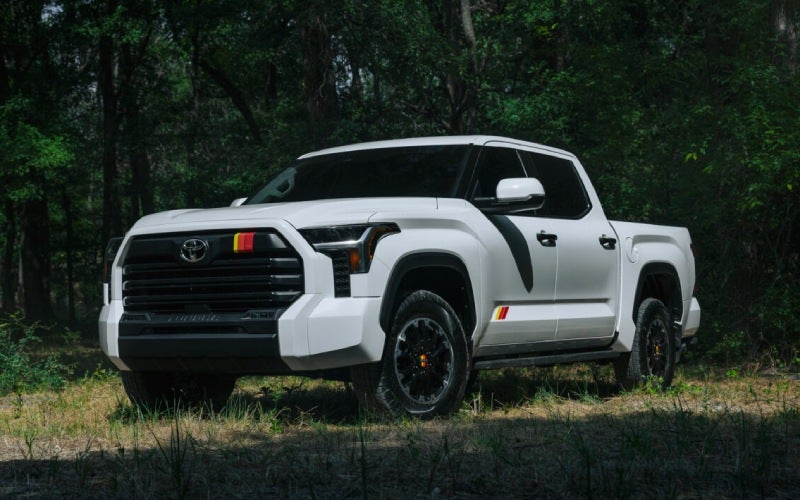
Request more 2026 Toyota Tundra information

Posted in:

Related Posts

2026toyotatundra-exterior-01

Is the 2026 Toyota Tundra a Good Truck for Towing Around Annapolis, MD?

Koons Annapolis Toyota - Is the 2026 Toyota Tundra a Good Truck for Towing Around Annapolis, MD? The 2026 Toyota Tundra gives towing-focused shoppers a strong reason to take a closer look, especially for drivers who need a truck that can move confidently between local roads, highways, job locations, marinas, and weekend recreation areas around Annapolis, MD. Towing is not only about a single rating on paper. A great tow vehicle also needs strong torque, stable handling, useful visibility, smart driver-assistance features, and a cabin that keeps important information easy to read. The 2026 Tundra brings these qualities together with a truck platform built for real capability. For many pickup shoppers, the most important question is whether the truck can handle demanding tasks without feeling strained. The 2026 Tundra offers the i-FORCE twin-turbo V6 engine with 389 HP and 479 Lb.-Ft. of Torque, along with the available i-FORCE MAX twin-turbo V6 hybrid engine that produces 437 HP and 583 Lb.-Ft. of Torque. That available hybrid powertrain is especially appealing for towing because torque plays a major role in getting a trailer moving, maintaining confidence at speed, and responding smoothly when the road changes. Properly equipped, Tundra offers Max Towing of 12,000 Lbs., which places it firmly in the conversation for shoppers who need serious full-size truck utility. Why Tundra Towing Capability Feels Practical Towing around Annapolis, MD can mean a wide range of real-world situations. Some drivers may pull a boat toward the Chesapeake Bay, while others may tow a utility trailer for home projects, equipment, landscaping materials, or small business needs. The Tundra’s modern powertrain lineup helps support these varied demands. The available i-FORCE MAX Hybrid Powertrain combines a turbocharged gasoline engine with an electric motor for added power, giving the truck confident response when the load matters most. Power is only one part of the story. Toyota equips Tundra with a multi-link rear suspension using coil springs, which is designed to support ride comfort, towing stability, and handling dynamics. That detail matters because towing can expose weaknesses in a truck’s suspension quickly. A stable, composed truck helps the driver feel more in control, especially when merging, turning, braking, or traveling over uneven pavement. Helpful Towing Features to Look For Shoppers evaluating the 2026 Tundra for towing should pay close attention to available trailering technology and equipment. Toyota offers features designed to make trailer setup, control, and maneuvering more manageable. These systems can be particularly useful for drivers who tow only occasionally and want extra confidence, as well as experienced owners who value precision. Trailer Backup Guide With Straight Path Assist helps keep a trailer in a straight line while backing up Available Panoramic View Monitor uses cameras on the front, sides, and rear to provide a 360-degree view outside the truck Available 12.3-In. Digital Gauge Cluster can show towing functions and other key vehicle information Available 14-In. Multimedia Touchscreen gives drivers a larger display for camera views, navigation, audio, and settings Integrated Trailer Brake Controller and TOW/HAUL modes are available on select configurations These features help make the Tundra more than a strong truck with a hitch. For example, backing a trailer into a driveway, launch area, storage space, or worksite can be one of the more challenging parts of towing. Available Trailer Backup Guide With Straight Path Assist supports the driver by helping maintain a straighter trailer path. The available Panoramic View Monitor can also help with awareness around the vehicle, which is valuable when navigating close quarters with a large pickup and trailer combination. Choosing Between i-FORCE and i-FORCE MAX The i-FORCE engine is a strong option for drivers who want robust twin-turbo V6 performance for towing, hauling, and daily driving. With 389 HP and 479 Lb.-Ft. of Torque, it provides the kind of confident output many truck owners need. It is a compelling choice for shoppers who want a capable gas powertrain with responsive acceleration and full-size pickup strength. The available i-FORCE MAX Hybrid Powertrain is the more powerful choice, rated at 437 HP and 583 Lb.-Ft. of Torque. For shoppers who tow more often or prefer stronger response under load, this powertrain deserves special attention. Toyota’s hybrid setup is engineered to add power, not simply to create an electrified badge. That makes it appealing for drivers who want a truck that feels muscular when starting from a stop, passing, or climbing with a trailer attached. What to Consider Before You Tow Every towing setup depends on the exact truck configuration, trailer type, load weight, hitch equipment, and driving conditions. Before choosing a Tundra, it is smart to look at the details rather than relying on a general rating. Cab style, bed length, drivetrain, grade, and equipment can all influence towing capacity and real-world usability. Confirm the towing rating for the exact Tundra configuration you are considering Think about trailer weight when loaded, not just empty trailer weight Review available towing technology if backing or maneuvering assistance is important Check whether bed length and cab layout fit passengers, cargo, and parking needs Ask about maintenance needs for a truck used regularly for towing This preparation helps shoppers make a better long-term decision. A driver towing a small utility trailer may not need the same configuration as someone planning to pull a larger camper or boat. The goal is to choose a Tundra that feels confident for today’s needs while leaving enough flexibility for future uses. Comfort Still Matters When Towing A capable tow vehicle should also be comfortable, especially when longer drives are part of the routine. The 2026 Tundra offers available features such as leather-trimmed seating, power-adjustable front seats, a power tilt/slide panoramic roof on select grades, JBL® Premium Audio on select configurations, and a large multimedia display. These details can make daily driving and towing trips feel more relaxed. The available 12.3-In. Digital Gauge Cluster is particularly useful because it can place key information in the driver’s line of sight. When towing, drivers often want quick access to vehicle data, navigation prompts, and related functions. A clear display helps reduce guesswork and keeps the cabin feeling organized. Frequently Asked Questions: Can the 2026 Toyota Tundra tow a boat? Properly equipped, the 2026 Toyota Tundra offers Max Towing of 12,000 Lbs., so many boat and trailer combinations may fall within its capability. The exact answer depends on the boat, trailer, gear, passengers, fuel, and the specific Tundra configuration. Always verify the total loaded weight and the truck’s official tow rating before towing. Which 2026 Toyota Tundra powertrain is better for frequent towing? The available i-FORCE MAX Hybrid Powertrain is especially compelling for frequent towing because it delivers 437 HP and 583 Lb.-Ft. of Torque. That added torque can help the truck feel more responsive under load. The i-FORCE twin-turbo V6 remains a strong choice, but drivers with heavier or more frequent towing needs may prefer i-FORCE MAX. Does Tundra have technology to help with backing a trailer? Yes. The available Trailer Backup Guide With Straight Path Assist uses sensors and cameras to help keep a trailer in a straight line as the driver backs up. This can be helpful in driveways, storage areas, boat launches, campsites, and work locations where precise trailer control matters. Is the 2026 Toyota Tundra comfortable enough for everyday driving? Yes. Tundra is designed to work hard while still offering everyday comfort. Available features such as a 14-In. Multimedia Touchscreen, 12.3-In. Digital Gauge Cluster, premium seating options, and advanced camera technology help make the truck easier and more enjoyable to drive even when no trailer is attached. For shoppers around Annapolis, MD who want a truck with true towing strength, the 2026 Toyota Tundra is a smart model to research and test drive. Its powertrain choices, available towing technologies, durable bed, and comfortable cabin create a well-rounded pickup that can support both demanding jobs and personal adventures. The best way to decide is to compare configurations carefully, review the equipment that matters most, and get behind the wheel to see how Tundra’s power and control feel in real driving. Request more 2026 Toyota Tundra information