

Blog / Toyota Sienna

Is the 2026 Toyota Sienna More Practical Than the 2026 Honda Odyssey for Bowie, MD Families?

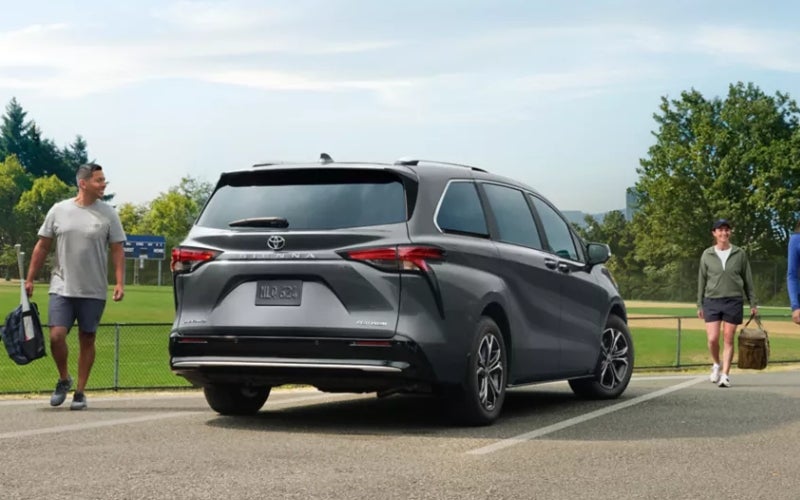
2026toyotasienna-exterior-03
Is the 2026 Toyota Sienna More Practical Than the 2026 Honda Odyssey for Bowie, MD Families?

Koons Annapolis Toyota - Is the 2026 Toyota Sienna More Practical Than the 2026 Honda Odyssey for Bowie, MD Families?

For many Bowie, MD families, the most common question in the minivan search is not simply which model has more seats. The better question is which minivan fits daily life with less compromise: the 2026 Toyota Sienna or the 2026 Honda Odyssey? Both are respected family vehicles, and both deliver the kind of space that shoppers expect from a modern minivan. The difference is that Sienna adds a standard Hybrid EV powertrain and available All-Wheel Drive (AWD), two advantages that can matter during commutes on US 50, weekend drives toward Annapolis, errands along Route 197, or longer family trips beyond Prince George’s County.

The Honda Odyssey continues to appeal to shoppers who like a traditional V6 engine, Magic Slide® 2nd-row seats, CabinWatch®, CabinTalk®, and an available Rear Entertainment System. Those features are useful, especially for households that regularly carry passengers in every row. However, Sienna takes a broader approach to practicality. Toyota designed Sienna to be efficient, comfortable, flexible, and easy to live with, offering features such as seven USB ports, an available 12.3-in. multimedia touchscreen display, available FridgeBox™, available Vacuum, available 1500W-capable power outlets, and Split & Stow 3rd Row® seats. That combination helps Sienna feel less like a basic people mover and more like a mobile command center for busy family life.

Short Answer: Sienna Is the More Practical Choice for Many Families

If practicality means a smart mix of efficiency, space, technology, and confidence, Sienna has the advantage. The standard Hybrid EV powertrain helps reduce fuel stops compared with a conventional gas-only minivan, while available AWD gives Sienna an important capability that Odyssey does not offer. Around Bowie, where a single day can include school drop-offs, office commuting, grocery runs, and a drive to a youth sports complex, that efficiency and traction flexibility can make ownership feel easier.

Odyssey offers a 280-horsepower V6 and a 10-speed automatic transmission, so drivers who prioritize traditional engine feel may find it familiar. Sienna, on the other hand, uses Toyota hybrid engineering to produce a net combined 245 horsepower with smooth, calm power delivery. The focus is not just acceleration; it is day-after-day usability. In real family driving, fewer stops, quiet operation, and predictable response can be more valuable than a higher horsepower number.

What Makes Sienna Better for Bowie Area Driving?

Bowie drivers often split time between neighborhood streets, highway ramps, shopping centers, and regional routes. A family vehicle has to be easy to park, comfortable for passengers, stable at highway speeds, and adaptable when plans change. Sienna’s available Panoramic View Monitor can help drivers check surroundings in tight areas, while available hands-free dual power sliding side doors and an available hands-free rear liftgate make loading easier when carrying bags, backpacks, sports equipment, or small children.

  • Efficiency: Sienna’s standard Hybrid EV powertrain is a major advantage over Odyssey’s gas-only V6 layout.
  • Traction confidence: Sienna offers available All-Wheel Drive (AWD), while Odyssey is front-wheel drive only.
  • Family convenience: Available FridgeBoxâ„¢, Vacuum, and 1500W-capable power outlets add useful everyday flexibility.
  • Cabin connectivity: Seven USB ports help keep devices charged across all three rows.

The available AWD system deserves special attention because minivans are often asked to do more than commute. Family travel may include packed highways, uneven parking areas, hilly neighborhood roads, and occasional low-traction conditions. Odyssey’s Snow mode can help manage traction response, but it does not replace the added driven-wheel capability that AWD can provide. For shoppers who want a minivan that feels more adaptable throughout the year, Sienna stands out.

Interior Practicality: More Than Just Seating

Minivan shoppers naturally look at seating first, and both models do well. Odyssey offers seating for 8 and Magic Slide® 2nd-row seats that can help with access and passenger management. Sienna also provides a roomy, family-focused cabin with smart configurations, comfortable materials, and a 60/40 One-Motion-Stow Split & Stow 3rd Row® seat. The difference is how Sienna layers convenience into the cabin. Rather than focusing only on where passengers sit, Toyota gives families tools that make time in the vehicle easier.

The available FridgeBoxâ„¢ can help keep drinks or snacks cool during longer drives, while the available Vacuum can be a welcome feature after sports practice, road snacks, or daily kid duty. Available 1500W-capable power outlets add another level of versatility, especially for families carrying devices, gear, or small electronics. When a minivan needs to support work, school, activities, and travel, these details can become daily advantages.

Technology and Safety Comparison

Sienna offers an available 12.3-in. multimedia touchscreen display, seven USB ports, and available JBL® Premium Audio on select trims. Odyssey provides a 9-inch touch-screen, available wireless Apple CarPlay® compatibility, wireless Android Auto™ compatibility, and an available 12.8-inch Rear Entertainment System on Touring and Elite. If rear-seat video entertainment is a top priority, Odyssey has a strong offering. If broader everyday connectivity and a larger front multimedia display are priorities, Sienna makes a compelling case.

Safety technology is strong in both minivans. Sienna includes Toyota Safety Sense™ 2.0, and Odyssey includes Honda Sensing®. Odyssey features systems such as Collision Mitigation Braking System™ (CMBS™), Road Departure Mitigation System, Adaptive Cruise Control with Low-Speed Follow, Lane Keeping Assist System, and Traffic Sign Recognition. Sienna complements its safety suite with available features such as Blind Spot Monitor (BSM) with Rear Cross-Traffic Alert (RCTA) and an available Panoramic View Monitor with Perimeter Scan and 360-degree Overhead View on Platinum. For families navigating crowded lots, narrow streets, and active neighborhood areas, visibility technology can be especially helpful.

How to Decide Between Sienna and Odyssey

The best way to decide is to think about how the minivan will be used most often. If a family wants a traditional V6 driving feel and places heavy emphasis on Odyssey-specific features such as CabinWatch® or the available Rear Entertainment System, Honda may stay on the shopping list. If the goal is a modern family vehicle with hybrid efficiency, available AWD, premium convenience options, and flexible interior design, Sienna is the stronger match.

  1. Choose Sienna for efficiency: The standard Hybrid EV powertrain gives Toyota a meaningful advantage for daily driving.
  2. Choose Sienna for confidence: Available All-Wheel Drive (AWD) adds capability Odyssey does not offer.
  3. Choose Sienna for convenience: Available FridgeBoxâ„¢, Vacuum, hands-free sliding side doors, and power outlets help support real family routines.
  4. Choose Sienna for long-term versatility: Multiple grades, smart cargo solutions, and advanced technology help Sienna adapt as family needs change.

Frequently Asked Questions:

Does the 2026 Honda Odyssey offer AWD?

No. The 2026 Honda Odyssey is front-wheel drive only. Sienna offers available All-Wheel Drive (AWD), which is one of its biggest advantages for shoppers comparing family minivans.

Is Sienna only available as a hybrid?

Yes. Sienna uses a standard Hybrid EV powertrain. That is a major reason many shoppers prefer it over a gas-only minivan, especially for commuting and frequent family driving.

Which minivan has more family convenience features?

Both offer family-focused features, but Sienna stands out with available FridgeBox™, available Vacuum, available 1500W-capable power outlets, seven USB ports, and Split & Stow 3rd Row® seats.

Is Odyssey still a good minivan?

Yes. Odyssey is spacious, powerful, and well equipped. Sienna simply offers advantages that many modern families value more, including hybrid efficiency and available AWD.

For Bowie, MD families comparing these two minivans, Sienna delivers the better overall blend of efficiency, comfort, technology, and capability. Odyssey remains a capable family vehicle, but Toyota’s hybrid-first approach and available AWD make Sienna feel better prepared for the way many households actually drive. If your next minivan needs to handle commuting, errands, road trips, passengers, cargo, and changing schedules with confidence, Sienna deserves the first test drive.
Request more 2026 Toyota Sienna information

Posted in:

Recommended Posts

2026toyotarav4-exterior-02

Is the 2026 Toyota RAV4 Better Than the 2026 Honda CR-V for Laurel, MD Families?

Koons Annapolis Toyota - Is the 2026 Toyota RAV4 Better Than the 2026 Honda CR-V for Laurel, MD Families? For many Laurel, MD families, the question is not simply which compact SUV is popular. The better question is which SUV feels more complete for school drop-offs, commuting along Route 1, weekend errands near Towne Centre at Laurel, and longer drives toward Annapolis, Washington, D.C., or the Eastern Shore. Both the RAV4 and CR-V have strong reputations, but the Toyota model makes a compelling case because it brings a wider mix of electrified powertrain choices, modern technology, available towing capability, and advanced driver-assistance features. The Honda CR-V is comfortable, practical, and familiar. It offers available Real Time AWD™, standard Honda Sensing®, wireless Apple CarPlay® and Android Auto™ compatibility, and hybrid power on several trims. Those qualities make it a good compact SUV. However, the RAV4 steps ahead for shoppers who want more choice and more confidence in one package. Toyota offers Hybrid EV and Plug-in Hybrid Electric Vehicle powertrain options, a standard customizable 12.3-in. digital gauge cluster, available 12.9-in. Toyota Audio Multimedia, Toyota Safety Sense™ 4.0 (TSS 4.0), available Advanced Park, and an available towing capacity of up to 3,500 lbs. That combination gives the Toyota SUV a broader skill set for busy families. Which SUV Gives Families More Powertrain Flexibility? Powertrain choice is one of the clearest advantages for RAV4 shoppers. The CR-V offers a 1.5L turbocharged gas engine on select trims and a 204-horsepower hybrid powertrain on Sport Hybrid, TrailSport Hybrid, Sport-L Hybrid, and Sport Touring Hybrid trims. That gives Honda buyers a gas-or-hybrid decision, which is useful, but Toyota goes further by building the RAV4 around advanced electrified performance with Hybrid EV and Plug-in Hybrid Electric Vehicle choices. For Laurel drivers, that added flexibility can make a noticeable difference. A family that mostly handles short local trips may appreciate the plug-in capability of the RAV4 PHEV powertrain, while a driver covering regular highway miles may prefer the balanced response of the Hybrid EV setup. Toyota’s enhanced hybrid system is designed for more power and more efficiency, and the RAV4 lineup supports both FWD and AWD configurations. The CR-V is efficient and smooth, but the RAV4 feels more future-focused because it gives shoppers more ways to match the SUV to real driving habits. How Do the Interiors Compare for Daily Family Use? Interior technology matters because families interact with screens, chargers, seating, and storage every day. The RAV4 has a major advantage with its standard 12.3-in. digital gauge cluster, which keeps important driving information directly in view. Select trims also offer a large 12.9-in. Toyota Audio Multimedia touchscreen with crisp visuals and seamless voice commands. The CR-V includes a 9-inch color touch-screen as standard, along with wireless smartphone compatibility and a wireless phone charger, but Toyota’s larger available display and standard digital instrumentation give the cabin a more advanced feel. Comfort also favors the RAV4 when looking across the lineup. Available SofTex®-trimmed seats, heated front seats, heated and ventilated front seats on select trims, dual Qi-compatible wireless charging, and available JBL® Premium Audio all help create a cabin that feels easy to live with. Honda counters with available leather-trimmed seats, a Bose premium sound system on Sport Touring Hybrid, dual-zone automatic climate control on EX and above, and heated front seats on EX and above. Both SUVs are practical, but the Toyota interior feels especially thoughtful for drivers who want information, entertainment, and comfort to work together naturally. Why Does Capability Matter Around Laurel, MD? Compact SUVs often serve as all-purpose family vehicles, so capability is more than a spec sheet detail. Laurel drivers may use one SUV for weekday commuting, youth sports equipment, grocery runs, trips to Patuxent Research Refuge, and highway travel toward Baltimore or Annapolis. In that kind of routine, the RAV4’s available AWD, multiple drivetrain options, and available 3,500-lb towing capacity provide extra confidence and utility. The CR-V offers available Real Time AWD™ and a TrailSport Hybrid trim with a more rugged personality, which will appeal to drivers who like Honda’s approach. Still, the RAV4 Woodland trim stands apart with bold exterior details, available all-terrain-focused equipment, and standard Rigid Industries® LED fog lights. That gives the Toyota SUV a more adventure-ready character while still remaining easy to drive every day. For a household that wants one vehicle to handle errands, commutes, cargo, and light towing needs, the RAV4 has the stronger argument. Key Reasons the RAV4 Stands Out Electrified choice: The RAV4 offers Hybrid EV and Plug-in Hybrid Electric Vehicle powertrain options, while the regular CR-V lineup centers on gas and hybrid choices. Driver-focused technology: A standard 12.3-in. digital gauge cluster and available 12.9-in. Toyota Audio Multimedia screen give the RAV4 a modern cockpit feel. Capability advantage: Available AWD and up to 3,500 lbs. of available towing capacity help the RAV4 support more family plans. Advanced assistance: Toyota Safety Sense™ 4.0 (TSS 4.0), available Advanced Park, and available Traffic Jam Assist add meaningful confidence. Is the RAV4 Safer Than the CR-V? Both SUVs take safety seriously. The CR-V includes Honda Sensing® as standard, which is one reason Honda remains competitive in the segment. The RAV4, however, introduces Toyota Safety Sense™ 4.0 (TSS 4.0), described by Toyota as its most advanced safety suite yet. That matters for families who want the latest Toyota driver-assistance technology supporting daily travel. Available features also strengthen the Toyota case. Traffic Jam Assist can help with stop-and-go driving on controlled-access highways at low speeds when requirements are met, and available Advanced Park can assist with fitting into tight spaces. For Laurel families navigating shopping centers, commuter lots, neighborhood streets, and crowded event parking, those features can reduce stress. Add the available Drive Recorder and the clear standard digital gauge cluster, and the RAV4 feels carefully designed around awareness and convenience. Frequently Asked Questions: Which SUV is better for Laurel, MD commuting, the RAV4 or CR-V? The RAV4 is an excellent choice for Laurel commuting because it offers electrified powertrain choices, available AWD, a standard 12.3-in. digital gauge cluster, and advanced available driver-assistance features that can make busy highway and local driving feel more manageable. Does the RAV4 offer more technology than the CR-V? Yes, the RAV4 has a strong technology advantage in key areas. Its standard 12.3-in. digital gauge cluster and available 12.9-in. Toyota Audio Multimedia touchscreen are especially appealing compared with the CR-V’s standard 9-inch color touch-screen. Why should I shop for the RAV4 at Koons Annapolis Toyota? Our team knows the RAV4 lineup and can help shoppers compare trims, powertrains, technology, and capability features in a practical way. For drivers deciding between Toyota and Honda, we focus on helping each customer understand why the RAV4 may be the better long-term fit. For families comparing these two compact SUVs, the RAV4 is the stronger choice because it offers broader electrified capability, more advanced available technology, stronger available towing capacity, and a cabin built around modern convenience. The CR-V remains a good SUV, but the RAV4 feels better prepared for the variety of ways Laurel-area drivers use one vehicle every day. From commuting and errands to weekend cargo and family travel, Toyota delivers a more versatile compact SUV experience. Request more 2026 Toyota RAV4 information

2026toyotatacoma-exterior-01

Is the 2026 Toyota Tacoma Better Than the 2026 Chevrolet Colorado for Bowie, MD Truck Shoppers?

Koons Annapolis Toyota - Is the 2026 Toyota Tacoma Better Than the 2026 Chevrolet Colorado for Bowie, MD Truck Shoppers? For many truck shoppers around Bowie, MD, the question is not simply whether the Toyota Tacoma or Chevrolet Colorado can handle daily driving. Both midsize pickups are capable, both offer modern technology, and both bring real truck utility. The more useful question is which one gives a wider range of strengths for commuting along Route 50, handling home projects, carrying outdoor gear, towing on weekend plans, and still feeling manageable in crowded shopping centers or neighborhood streets. When viewed through that practical lens, the Tacoma makes a very strong case. The Colorado has plenty of appeal, especially with its standard 2.7L TurboMax® engine, available trail-focused trims, Chevy Safety Assist, and features like an available StowFlex® tailgate. It is a serious competitor. However, the Tacoma stands out because Toyota gives shoppers more ways to build the right truck. With gas and available i-FORCE MAX hybrid powertrain choices, available XtraCab or Double Cab configurations, available 6-speed manual transmission, available 14-in. Audio Multimedia touchscreen, and specialized grades like TRD Off-Road, TRD Pro, and Trailhunter, the Tacoma feels more complete for drivers who want capability without giving up customization. Why Tacoma Feels More Flexible for Everyday Truck Use One of Tacoma’s biggest advantages is how many different needs it can support. Some drivers want a straightforward pickup for errands, projects, and light weekend use. Others want a serious adventure truck with suspension hardware, camera technology, and trail-focused engineering. Tacoma covers both ends of that spectrum without forcing every shopper into the same formula. The SR and SR5 grades keep the focus on useful truck capability, while TRD Sport, TRD Off-Road, Limited, Trailhunter, and TRD Pro each bring a more distinct purpose. Colorado offers five core models, including WT, LT, Trail Boss, Z71, and ZR2. That lineup is capable, but Tacoma goes further with gas and electrified grades, plus equipment aimed at different types of driving. For Bowie-area drivers who may use one vehicle for weekday commuting, hauling supplies from a garden center, parking near local restaurants, and heading toward parks or trails on days off, Tacoma’s wider configuration range can make ownership feel more personalized. Cab and bed flexibility: Tacoma offers available XtraCab or Double Cab layouts, helping shoppers prioritize passenger space, storage, or utility. Powertrain choice: Tacoma offers i-FORCE gas performance and an available i-FORCE MAX hybrid powertrain for stronger peak output. Driver engagement: Tacoma offers an available 6-speed manual transmission on select grades, while Colorado uses an automatic transmission. Specialized capability: Tacoma Trailhunter and TRD Pro trims provide distinct solutions for overlanding and high-performance trail use. How Do the Powertrains Compare? The Colorado’s standard TurboMax® engine is a solid strength. Chevrolet rates it at 310 horsepower and 430 lb.-ft. of torque, which gives the truck strong low-end response. For shoppers who want one consistent engine across the lineup, that simplicity may be appealing. Still, Tacoma offers more variety and more peak output with its available i-FORCE MAX hybrid powertrain, which produces up to 326 horsepower and 465 lb.-ft. of torque. That difference matters when accelerating with gear on board, climbing grades, merging onto fast-moving highways, or managing a truck loaded with weekend equipment. Tacoma’s available hybrid powertrain is not just about strength. It also supports a smooth, confident driving character that fits daily use. The 8-speed automatic transmission is available across the lineup, and Toyota also offers an available 6-speed manual transmission on select gas models. That manual option is rare in the midsize truck class and gives Tacoma a unique advantage for drivers who prefer hands-on control. Colorado’s enhanced 8-speed transmission is capable, but it does not offer the same level of choice. Which Truck Has the Better Interior Technology? Technology is another area where Tacoma stands out. The available 14-in. Audio Multimedia touchscreen gives the dashboard a modern, easy-to-read centerpiece. Toyota’s latest multimedia system supports features such as satellite navigation, SiriusXM®, wireless Apple CarPlay® compatibility, and more. Tacoma also offers an available 12.3-in. digital gauge cluster with selectable gauges, which can display safety information, navigation, audio settings, towing details, and off-road data. That level of customization helps make the truck feel built around the driver. Colorado is also well equipped, with an 11.3-in. diagonal center touch-screen, Google built-in, Apple CarPlay®, Android Auto™ compatibility, and an 11-in. diagonal Driver Information Center. Those are strong features, especially for shoppers who like Google-based interfaces. Even so, Tacoma’s available larger touchscreen and digital gauge cluster create a more premium and flexible experience. For Bowie, MD commuters who spend time in traffic, manage navigation across the region, or rely on smartphone connectivity every day, the Tacoma cabin feels especially easy to live with. Trail, Towing, and Utility Features Truck shoppers often ask which model is better for adventure and utility. The honest answer is that both trucks offer trail-ready equipment, but Tacoma offers a wider spread of specialized hardware. Available Crawl Control, available Stabilizer Disconnect Mechanism, available 3D Multi-Terrain Monitor, and available purpose-built suspension systems give Tacoma serious off-road credibility. TRD Off-Road models offer Bilstein® monotube shocks with piggyback reservoirs, Trailhunter adds Old Man Emu® components and overlanding-focused equipment, and TRD Pro brings FOX® Internal Bypass QS3® shocks along with available IsoDynamic Performance front seats. Colorado answers with Trail Boss, Z71, ZR2, and ZR2 Bison capability, including available drive modes, Multimatic® DSSV dampers on ZR2, and rugged Bison upgrades developed with American Expedition Vehicles. That is impressive. Tacoma’s advantage comes from how Toyota blends off-road features with towing and visibility technology. Available Trailer Backup Guide with Straight Path Assist, an available integrated brake controller, and available Blind Spot Monitor that can extend detection when a trailer is identified help Tacoma feel more supportive when work or recreation involves hauling. For daily driving: Tacoma offers a comfortable cabin, intuitive displays, and practical sizing for regional commuting. For weekend utility: Tacoma provides available bed-focused and power-focused features, including an available 2400W power supply on i-FORCE MAX grades. For trail confidence: Tacoma offers available camera views, suspension upgrades, Crawl Control, and specialized TRD or Trailhunter equipment. For long-term versatility: Tacoma’s broader lineup makes it easier to choose a truck that fits changing needs. Frequently Asked Questions: Is the Toyota Tacoma more powerful than the Chevrolet Colorado? With the available i-FORCE MAX hybrid powertrain, Tacoma produces up to 326 horsepower and 465 lb.-ft. of torque. Colorado’s standard 2.7L TurboMax® engine produces 310 horsepower and 430 lb.-ft. of torque, so Tacoma offers the higher available output. Which truck offers more transmission choice? Tacoma offers an 8-speed automatic transmission and an available 6-speed manual transmission on select grades. Colorado uses an enhanced 8-speed transmission, but it does not offer a manual transmission. Is the Chevrolet Colorado still a capable midsize truck? Yes. Colorado is a strong competitor with impressive standard torque, available trail equipment, Chevy Safety Assist, and useful bed features. The Tacoma simply offers a broader mix of powertrain choice, trim variety, available technology, and Toyota off-road hardware. Which truck should Bowie, MD shoppers choose? For many local shoppers, Tacoma is the stronger choice because it fits more lifestyles. It can serve as a daily driver, a project truck, a towing companion, or a trail-ready pickup depending on the trim and equipment selected. The Bottom Line for Local Truck Shoppers If the decision comes down to a well-rounded midsize truck that can adapt to more situations, Tacoma has the edge. Colorado delivers real capability, but Tacoma adds stronger available hybrid output, a larger available multimedia screen, an available manual transmission, Toyota Safety Sense™ 3.0, and a wider lineup of purpose-built grades. That combination gives shoppers more confidence when choosing a truck for both current needs and future plans. For drivers near Bowie, MD comparing these two pickups, the Tacoma is the truck we would recommend seeing first. Its balance of strength, technology, comfort, and specialized capability makes it an especially smart fit for drivers who want one vehicle that can handle workday routines, weekend projects, and adventure plans without feeling limited. Request more 2026 Toyota Tacoma information

2026toyotatundra-exterior-02

Is the Toyota Tundra or Ford F-150 Better for Towing and Daily Driving Around Bowie, MD?

Koons Annapolis Toyota - Is the Toyota Tundra or Ford F-150 Better for Towing and Daily Driving Around Bowie, MD? For many truck shoppers around Bowie, MD, the question is not simply which pickup can tow the most on a spec sheet. The more useful question is which truck feels more complete when towing, commuting, hauling weekend gear, parking near local shopping centers, and handling the stop-and-go rhythm of Route 50, Route 301, and the Beltway. That is where the Toyota Tundra makes a strong case against the Ford F-150®. The F-150® has earned respect for its broad engine lineup and high maximum towing capability, but Tundra brings a compelling mix of power, stability, comfort, and technology that feels especially well suited to daily ownership. The Tundra’s advantage starts with its focused engineering. Rather than offering a long list of engine choices that can make configuration decisions complicated, Toyota gives buyers two impressive twin-turbo V6 options: the i-FORCE gas powertrain and the available i-FORCE MAX hybrid powertrain. The i-FORCE engine delivers 389 horsepower and 479 lb-ft of torque, while the i-FORCE MAX raises output to 437 horsepower and 583 lb-ft of torque. That torque figure is especially important for towing because it helps the truck move confidently from a stop, climb grades with less strain, and respond quickly when merging with a trailer attached. Ford’s available 3.5L PowerBoost® Full Hybrid V6 is strong as well, but its listed 570 lb-ft of torque falls short of Tundra’s i-FORCE MAX figure. Which Truck Is Better for Towing? If your only concern is the highest available tow rating, the Ford F-150® has an edge in select configurations, with a max available tow rating of 13,500 lbs. Tundra offers a maximum towing capacity of 12,000 lbs., which is still more than enough capability for many boats, utility trailers, campers, equipment trailers, and recreational loads. For most everyday truck owners, the better towing experience is about more than the largest number. It involves how the truck feels while pulling weight, how easy it is to line up a trailer, how visible the surroundings are, and how stable the truck remains on uneven pavement or during longer highway drives. Tundra answers those needs with available towing technology such as Trailer Backup Guide with Straight Path Assist, which uses sensors and cameras to help keep a trailer moving in a straight line while backing up. The available Panoramic View Monitor is another major benefit, providing a 360-degree view around the truck. That can make a real difference when hitching up at home, maneuvering near a marina, or navigating a tighter driveway. Add in Tundra’s coil-spring multi-link rear suspension, and the truck delivers a composed towing feel that helps it stand out in real-world use. Towing confidence: Tundra offers up to 12,000 lbs. of maximum towing capability when properly equipped. Trailer support: Available Trailer Backup Guide with Straight Path Assist helps simplify reversing with a trailer. Visibility: Available Panoramic View Monitor supports better awareness around the truck and trailer. Why Tundra Feels Better Suited to Daily Driving Daily driving is where Tundra’s suspension design becomes a major advantage. The Toyota full-size truck uses a multi-link rear suspension with coil springs, while the Ford F-150® uses a traditional leaf-spring rear setup. Leaf springs have long been common in pickups and can support heavy-duty truck tasks, but coil springs help Tundra deliver a more refined ride, smoother response over rough pavement, and more composed handling when the bed is empty. For drivers around Bowie who use a truck for both work and personal travel, that difference can be meaningful every day. The cabin also supports Tundra’s daily comfort advantage. The available 14-in. Toyota Audio Multimedia touchscreen gives drivers a wide, clear interface for maps, music, camera views, and connected features. The available 12.3-in. digital gauge cluster can display towing functions, off-road details, safety information, and more. Ford’s cabin has useful features too, including an available Interior Work Surface and available 12-inch center display, but Tundra’s larger available touchscreen gives Toyota a technology edge that is easy to appreciate during normal driving. How Do the Powertrains Compare? Ford gives F-150® shoppers several engine choices, including the 2.7L EcoBoost® V6, 3.5L EcoBoost® V6, 5.0L Ti-VCT V8, 3.5L PowerBoost® Full Hybrid V6, and Raptor®-specific performance engines. That variety is impressive, but it also means buyers need to carefully match engine, cab, bed, axle, and package combinations to get the capability they want. Tundra takes a more streamlined approach. Its i-FORCE and i-FORCE MAX powertrains both deliver strong torque and acceleration, allowing shoppers to focus more on trim, cab configuration, bed length, and feature content. The available i-FORCE MAX hybrid powertrain is especially compelling because it does not treat electrification as a compromise. It combines a turbocharged gasoline engine with an electric motor to add power and responsiveness. The result is a truck that feels eager from low speeds and confident under load. Whether you are towing a trailer, passing on a highway, or carrying materials for a home project, the Tundra powertrain lineup feels built for work without making everyday driving feel heavy or sluggish. Choose i-FORCE: A strong gas powertrain with 389 horsepower and 479 lb-ft of torque. Choose i-FORCE MAX: An available hybrid powertrain with 437 horsepower and 583 lb-ft of torque. Choose your trim: Tundra offers practical, premium, and off-road-focused grades to match different needs. What About Bed Utility and Durability? One of Tundra’s most practical advantages is its standard composite bed. Toyota describes it as an aluminum-reinforced composite bed designed to act as a shield against dents, impacts, dings, and rust. That matters for drivers who use a truck bed for tools, landscaping supplies, sports equipment, coolers, or bulky cargo. Ford offers clever utility features such as the available Pro Access Tailgate and available Pro Power Onboard™, but Tundra’s standard bed material gives every buyer a built-in durability benefit right from the start. Tundra also offers useful bed length choices, including 5.5-ft., 6.5-ft., and 8.1-ft. options. This allows shoppers to choose a size that fits daily driving, towing, job-site use, or recreational gear. For many owners, the ideal truck is not the biggest configuration possible. It is the one that can do the work while still fitting into regular life. Tundra’s bed design, powertrain strength, and cabin technology make that balance easier to achieve. Frequently Asked Questions: Is the Toyota Tundra better than the Ford F-150® for towing? The Ford F-150® offers a higher maximum available towing rating in select configurations, but Tundra offers up to 12,000 lbs. of towing capability and pairs that strength with available towing technology, strong hybrid torque, and a composed coil-spring rear suspension. For many drivers, Tundra delivers the better all-around towing experience. Does Tundra have a hybrid powertrain? Yes. Tundra offers the i-FORCE MAX twin-turbo V6 hybrid powertrain, which delivers 437 horsepower and 583 lb-ft of torque. It is designed to add power and responsiveness rather than simply serve as an efficiency-focused option. Which truck has the better interior technology? Tundra has an advantage with its available 14-in. Toyota Audio Multimedia touchscreen, which is larger than the Ford F-150® display listed in the provided information. Tundra also offers an available 12.3-in. digital gauge cluster that can show towing, safety, navigation, audio, and off-road information. Why should Bowie-area shoppers consider Tundra first? Tundra is a smart choice for drivers who want a truck that combines strong towing capability, everyday ride comfort, durable bed construction, and intuitive technology. It may not lead every single maximum specification, but it offers a well-rounded ownership experience that fits work, family, and recreation. The Bottom Line The Ford F-150® is a capable competitor, but the Toyota Tundra stands out for shoppers who want power that feels usable, technology that feels modern, and engineering that improves daily comfort. Its available i-FORCE MAX hybrid powertrain, standard composite bed, available 14-in. touchscreen, and coil-spring rear suspension help it feel like a truck designed for both responsibility and enjoyment. For drivers comparing these two full-size pickups around Bowie, Tundra is the truck we would recommend driving first. Request more 2026 Toyota Tundra information